
What Actually Makes a Website Convert (It Isn't the Design)
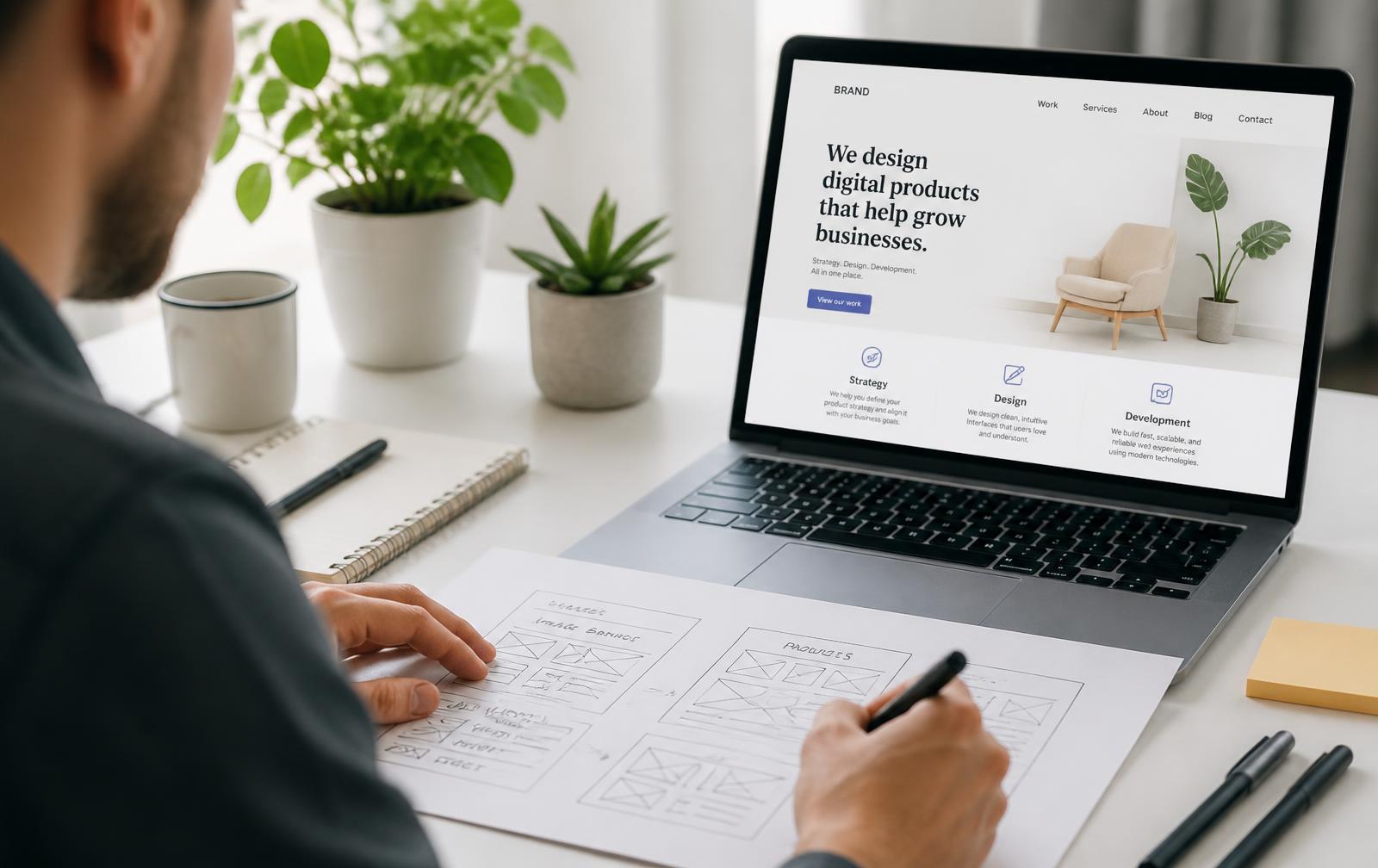
We audit a lot of websites. The ones that fail rarely fail because they look bad — they fail because a visitor cannot answer three questions in the first five seconds: what is this, is it for me, and what do I do next.
Lead with the outcome, not your company history
Your headline should describe the result a customer gets, in their words. 'Established in 1998' is a trust signal, not a hook. Save it for further down the page.
One primary action per page
Every additional choice reduces the odds of any choice being made. Pick the single action that matters most — call, book, quote, buy — and repeat it consistently down the page instead of competing with five alternatives.
Proof beats adjectives
Replace 'quality craftsmanship' with a photo of the work, a number, and a customer's name. Concrete proof is what moves skeptical buyers.
- Before/after galleries for trades and home services
- Named testimonials with a role and location
- Real numbers: projects completed, years, response time
Remove friction from the form
Every extra field costs you submissions. Ask for what you need to reply and nothing more. Name, contact method, and a short description will get you further than a ten-field intake questionnaire.
Speed is a conversion feature
A site that takes four seconds on mobile loses a meaningful share of visitors before they see anything. Compress images, cut unused scripts, and host somewhere fast.
Keep reading
Scan, Tap, Sold: How QR Codes Turn Foot Traffic into Customers
E-commerceShopify in 1970: The Small-Business Playbook for Selling Online
Web DesignWhy WordPress Still Powers the Web — and When It's Right for You
SEOThe Local SEO Checklist Every Small Business Should Finish This Month
Digital MarketingGoogle Ads vs. Meta and TikTok: Where Should a Local Budget Go?
Ready to put this to work?
Tell us about your business and we'll send a free estimate.